
Disaster Preparedness & Response Guide
Comprehensive sector-by-sector guidance for pre-disaster planning, immediate post-disaster actions, mid-term recovery, and long-term resilience building — aligned with international standards including Sphere, FEMA ICS, and WHO frameworks.
Select Phase
Preparedness activities and risk mitigation measures to implement before a disaster strikes
Activation Trigger: ⏱ Ongoing — review annually, update after every hurricane season. Activate enhanced measures upon Hurricane Watch issuance.
Select Sector
Disaster Type
Select a disaster type for specific actions and considerations
Hurricane Countdown Timeline
Critical actions at each stage before hurricane landfall
- Monitor weather updates every 2 hours
- Review and activate emergency plans
- Begin securing outdoor items and equipment
- Verify emergency supply inventories
- EOC moves to Enhanced Watch status
- Notify all staff of potential activation
- EOC ACTIVATED to full operations upon Hurricane Watch
- Begin pre-positioning emergency supplies to staging areas
- Activate Business Continuity Plans
- Hospitals begin discharge of stable patients for surge capacity
- Fuel all generators and emergency vehicles
- Open public shelters and begin voluntary evacuations
- Ports begin securing cargo and equipment
- Mandatory evacuations if ordered
- Complete all physical protection measures (shutters, sandbags)
- All non-essential government facilities closed and secured
- Hospitals in lockdown mode — emergency staff only
- Final fuel and supply distribution
- Ports closed to incoming traffic — all vessels secured
- Telecom companies activate backup systems and secure towers
- All personnel in shelter or assigned positions
- Final check of backup power systems
- Cease all outdoor operations
- Confirm all evacuation routes clear
- Emergency communications check with all stations
Private Residences
Homeowners, renters, and residential communities
Commercial Properties & Businesses
Retail, offices, industrial, and SMEs
Health Sector
Hospitals, clinics, pharmacies, and medical facilities
Government — Essential Facilities
EOCs, police/fire stations, disaster management, military installations
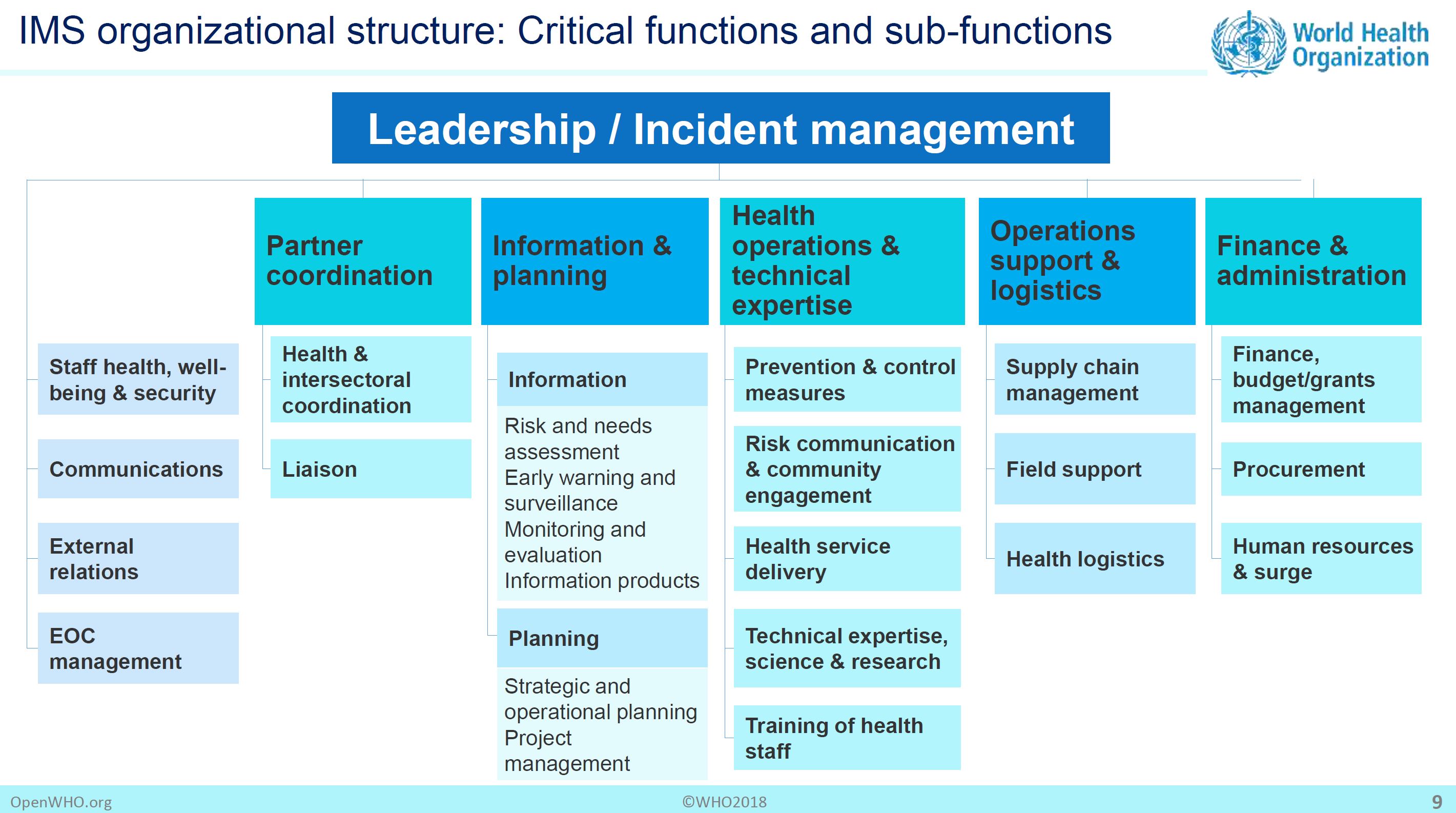
Incident Management System Structure
Government — Non-Essential Facilities
Line ministries, administrative offices, schools, community centers, cultural buildings
Telecommunications & Utilities
Power grid, water systems, telecom towers, internet, mobile networks
Ports & Airport Operations
Seaports, airports, cargo terminals — critical for island logistics and relief supply reception
Reference Documents Library
International frameworks and field guides for disaster management professionals
FEMA Incident Management Handbook (2017)
FEMA · 4.3 MB
WHO Emergency Response Framework, 2nd Ed. (2017)
WHO · 808 KB
Sphere Handbook (2018)
Sphere Association · Online
IASC Emergency Response Preparedness Guidelines (2023)
IASC · Online
CDEMA Comprehensive Disaster Management Strategy
CDEMA · Online
UNDRR Sendai Framework Monitor
UNDRR · Online
Logistics Cluster Operational Guidance
WFP Logistics Cluster · Online